- Role
- Design engineer, product owner
- Team
- Me and 2 backend engineers
- I did
- Research, design, frontend
- Timeline
- Beta in 4 weeks, then production
Admins at TruU's enterprise customers needed our delivery team to search their own sign-in logs. I prototyped a search that takes a plain question and applies the right filters. It replaced a six-month query language plan, reached customers in four weeks, and later retired the old events page.
Where it started
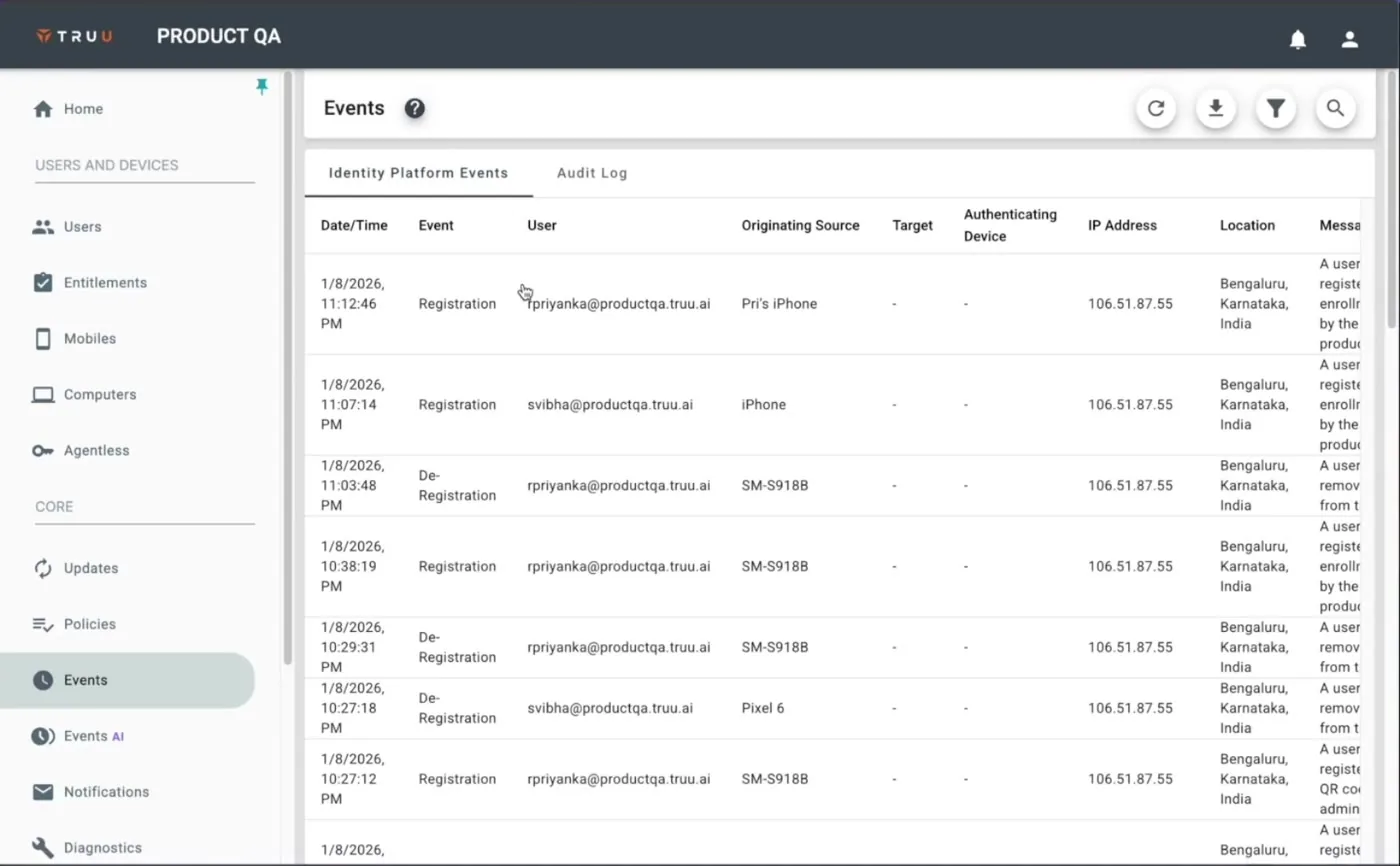
I started with research: what admins were trying to find on the events page, and where they got stuck. Their questions were simple. Who failed to sign in this week? From which device?
Getting there was not. The page was a wide table and a filter drawer full of TruU's internal event names. Most admins asked our delivery team to run searches for them.
Two ways forward
Product planned a JQL-style query language with autocomplete from our schema. Engineering scoped it at about six months, and admins would still need to learn syntax and field names.
Leadership wanted something in customers' hands sooner. I built a working prototype: type a question, and the right filters get applied. It replaced the plan.
Keeping customer data in TruU
My first concept was a chat agent that reads raw events and explains patterns over time. It meant sending customer data to an outside model, which our data policies didn't allow.
So the model's job got smaller. It sees the question and a list of our fields, and returns filters. The search runs inside TruU, on data the model never sees.
QuestionThe model gets this and our list of fields. Nothing else.
FiltersIt returns filters, shown as chips the admin can check and edit.
SearchRuns inside TruU on the real logs. Customer data never goes to the model.
Version 1 · October 2025Beta: one search box
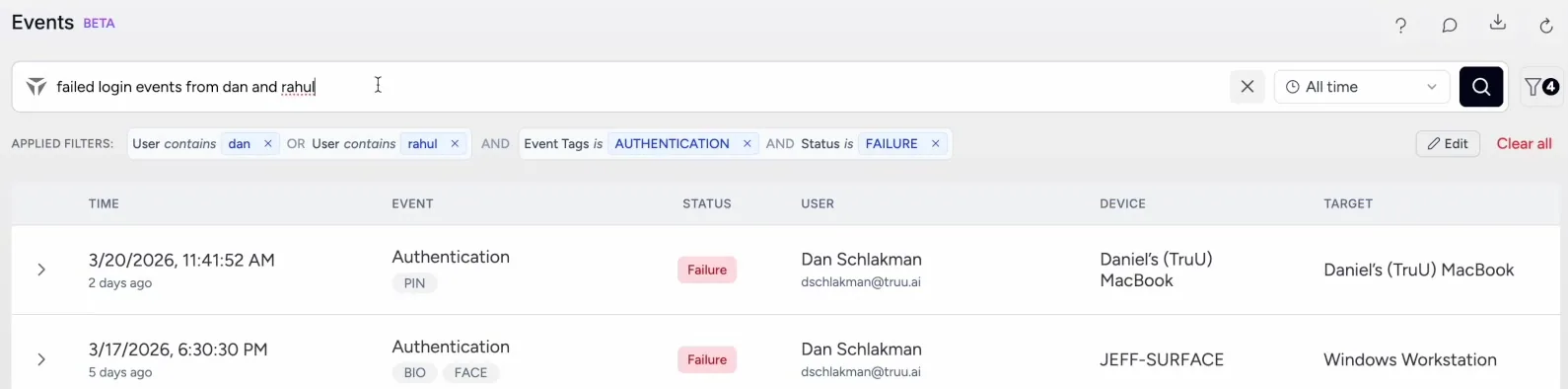
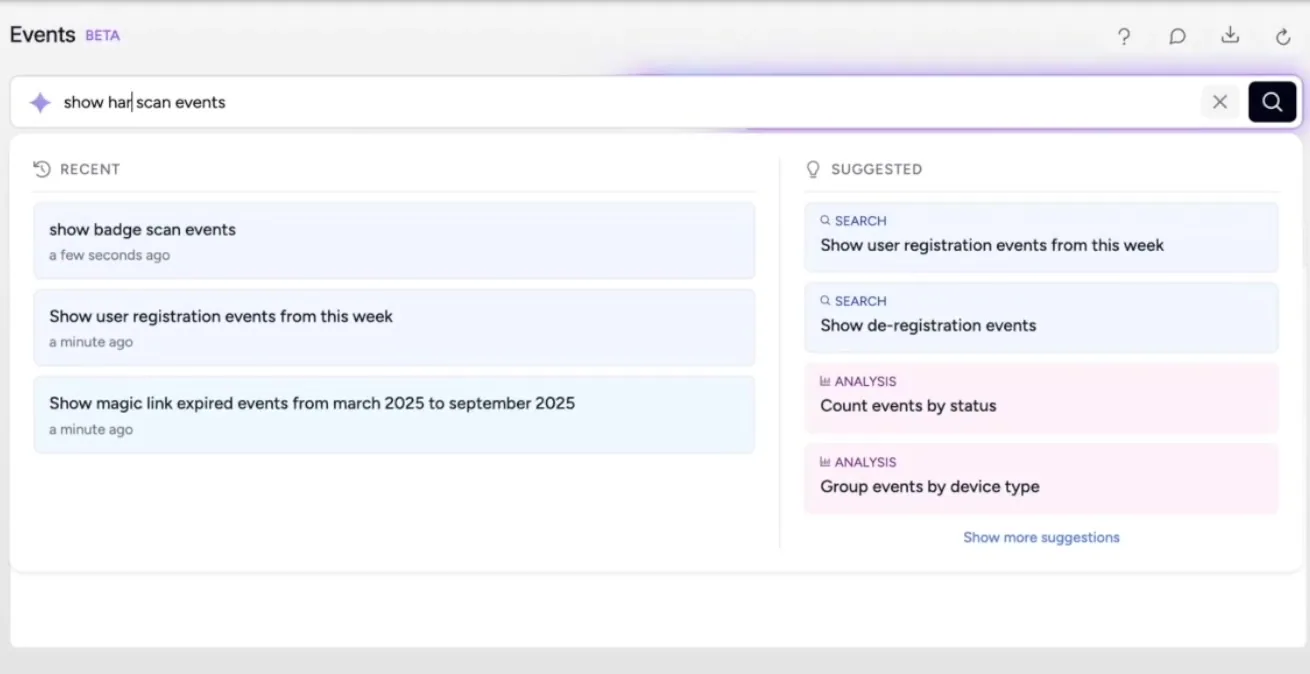
The beta was a single search box with recent and suggested questions. When a question used a term we don't track, it listed the closest real event types so the admin still had somewhere to go.
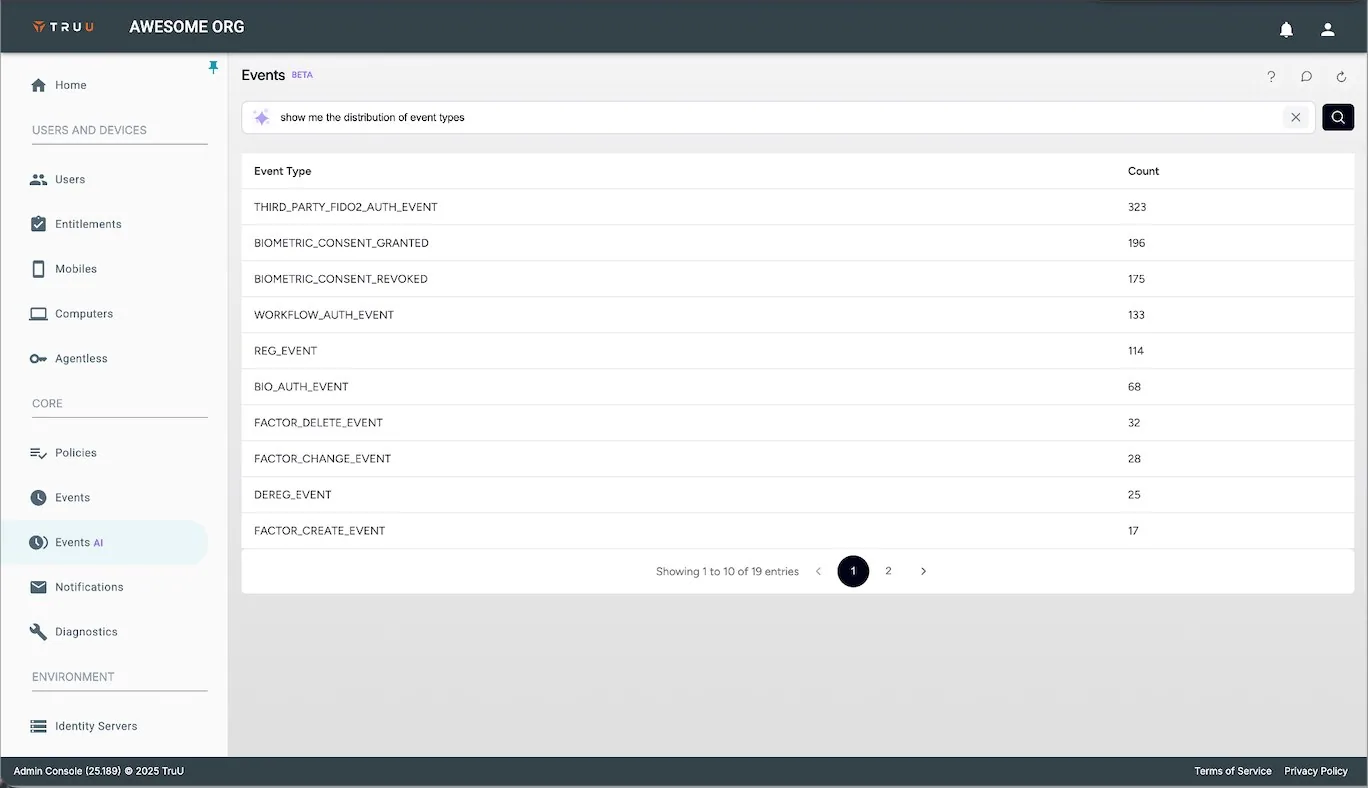
It went to TruU's internal teams and a few customers first, then to every customer as a beta next to the old Events page. Admins could also ask for counts and breakdowns, and two weeks later, export what they found. I collected their feedback and watched how they phrased questions.
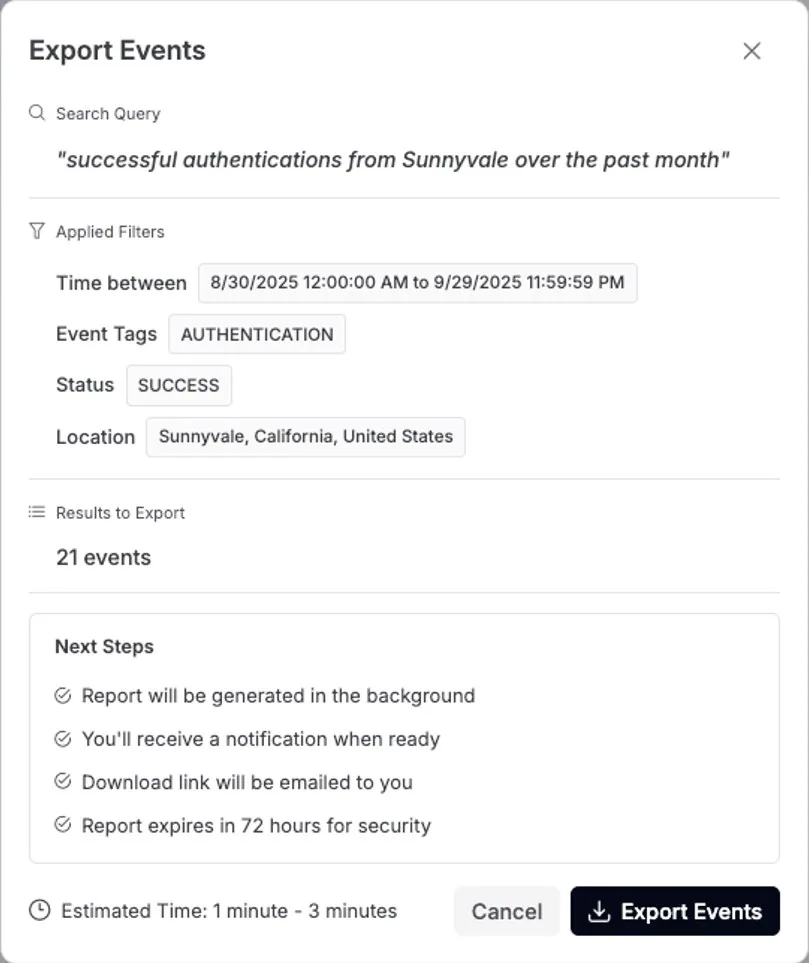
Version 2 · May 2026Easier to repeat, easier to control
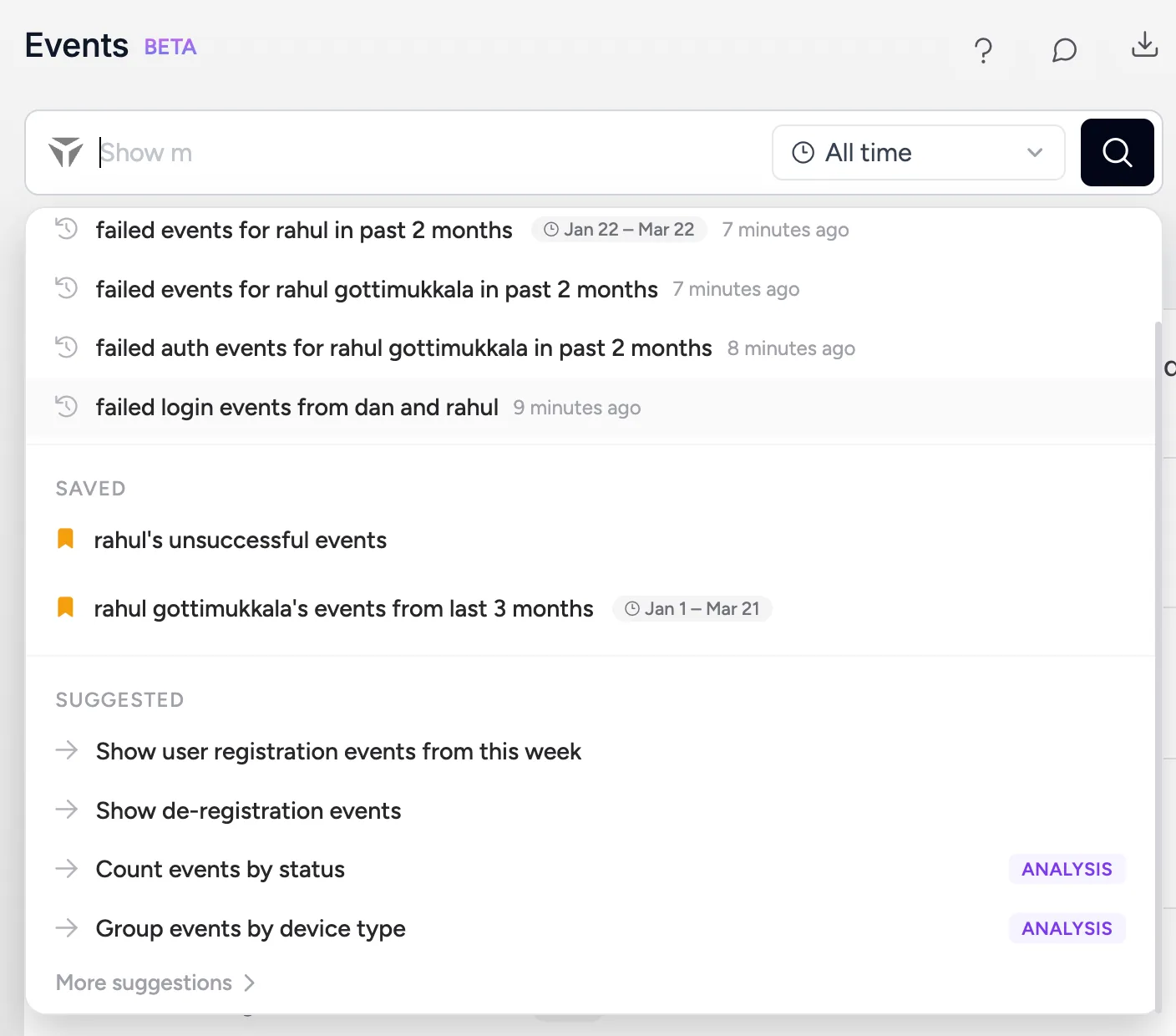
I revised the experience from beta feedback and shipped it to production. Search, filtering and export now all live on one page, so admins no longer need the old view. Each addition edits the same set of filters as the search box.
Example questions cycle in the empty box. A time picker fills in when a question mentions a date. Saved searches rerun common questions in one click. A filter builder handles AND and OR logic the old page couldn't.
Event types read in plain language too, like “User Registration” in place of USER_REGISTRATION.
Version 2What stays in the search box
In the beta, every applied filter was also written back into the search box. Admins saw each filter twice and weren't sure which one to edit.
I mapped how admins move between asking and clicking. The box now keeps only what the admin typed, so they can reword it. A click or a chip edit clears it, since the question has changed. Each path has tests.
| When the admin… | Search box | Chips | Time picker | Filter builder |
|---|---|---|---|---|
| Types a question | Keeps the text | Shows the filters | Set if the question names a time | Shows every filter |
| Clicks a value in the table | Clears | Adds a filter | No change | Adds the filter |
| Edits a chip or the builder | Clears | Updates | Updates if the time changed | Updates |
Outcome
Admins reach results about 60% faster, rarely need the delivery team, and run searches the old page couldn't express. Version 2 went to production and the old events page was retired.
It also changed how TruU builds. Leadership saw a small team ship in weeks and keep improving each release, and later organized other areas into pods the same way.
What I took from it
A prototype people can type into moves a roadmap faster than a spec. And many inputs stay simple when they all read from one source of truth.